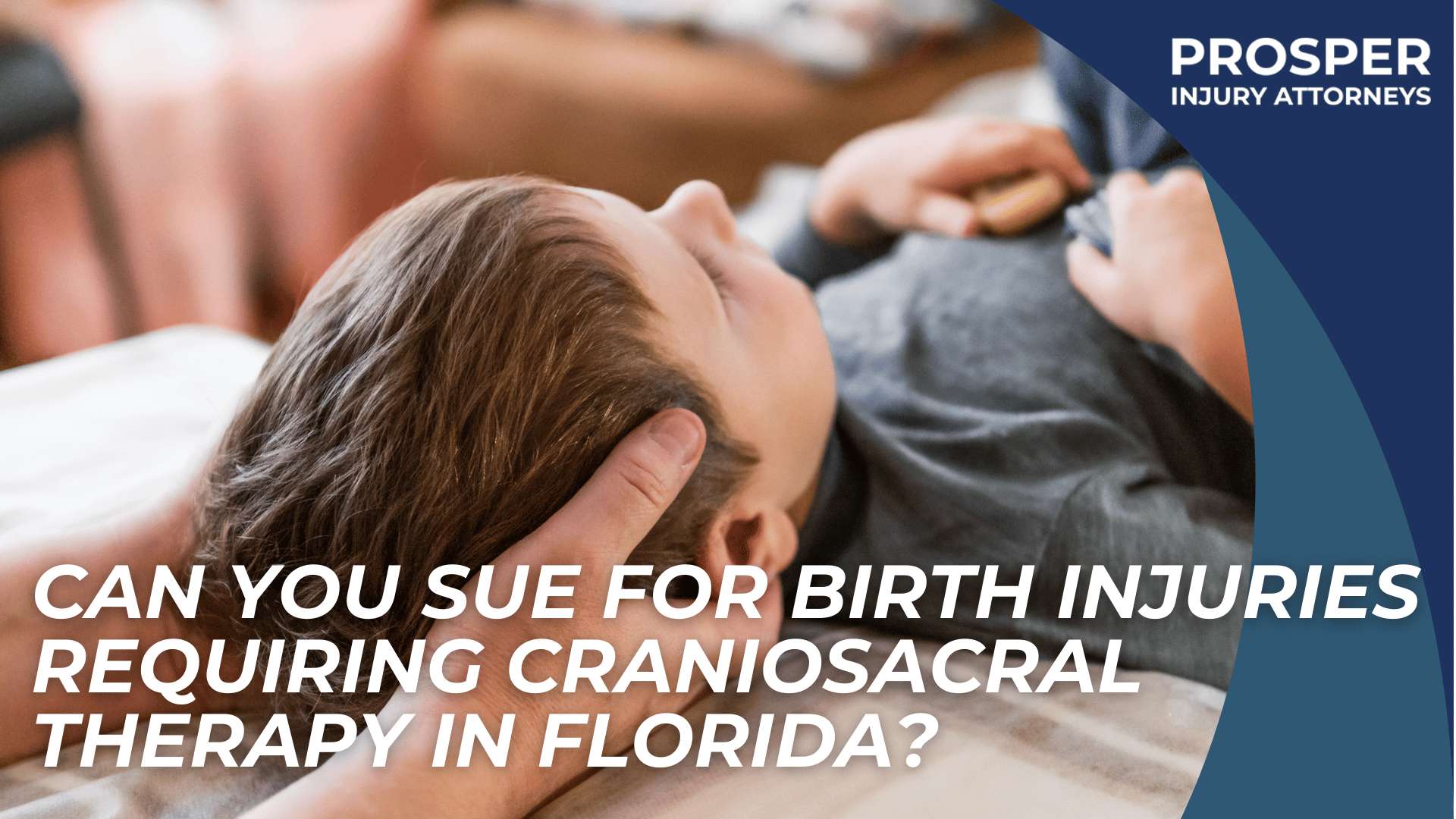
When your baby requires craniosacral therapy after a difficult delivery, you may wonder whether the underlying birth trauma could have been prevented. Florida law permits families to pursue medical malpractice claims when healthcare providers fail to meet the standard of care during labor and delivery, but the need for therapy alone does not automatically establish a legal claim. Understanding what must be proven—and how Florida courts evaluate birth injury cases—helps families make informed decisions about their legal options.
What Is Craniosacral Therapy and Why Do Babies Need It?
How CST Addresses Birth-Related Conditions
Craniosacral therapy involves gentle manipulation of an infant’s skull, spine, and sacrum to release tension that may have developed during birth. Practitioners apply extremely light pressure to address restrictions in the craniosacral system that can affect cerebrospinal fluid flow and nervous system function. The therapy targets conditions that often originate from the physical stresses of labor and delivery.
Common Birth Injuries Treated with Craniosacral Therapy
Families seek CST for infants experiencing a range of birth-related issues. These conditions may develop when delivery places unusual physical stress on the baby’s head, neck, or body:
- Torticollis, where the baby’s head tilts persistently to one side due to neck muscle tightness
- Cephalohematoma, a collection of blood between the skull and its covering membrane
- Caput succedaneum, swelling of the scalp caused by pressure during delivery
- Feeding difficulties including latching problems associated with tongue or lip ties
- Asymmetrical head shape from prolonged pressure during labor
- Persistent irritability or colic that may stem from nervous system stress
- Restricted range of motion in the neck or spine
Why Treatment Needs May Indicate Delivery Room Negligence
The fact that your baby requires therapeutic intervention raises an important question: was the birth trauma avoidable? Not every difficult delivery involves negligence, but certain circumstances warrant closer examination. When instrument-assisted delivery, delayed intervention, or failure to perform a timely cesarean section contributes to birth trauma, families may have grounds for a malpractice claim.
What Must You Prove to File a Birth Injury Lawsuit in Florida?
Call us today at (305) 694-2676 or
contact us online for a free case evaluation.
Hablamos español.


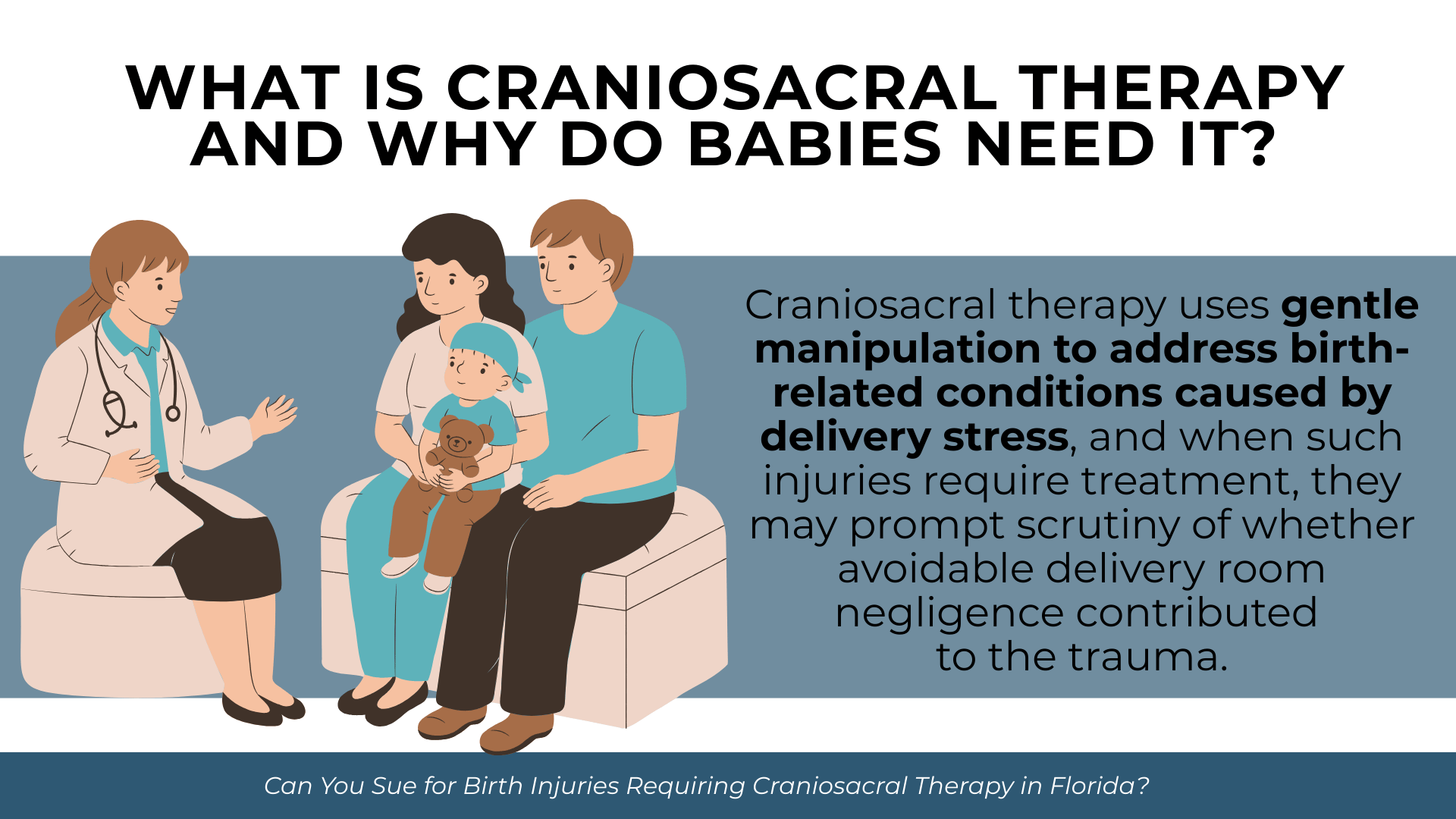
Establishing the Medical Standard of Care
Florida law defines the standard of care as “that level of care, skill, and treatment which, in light of all relevant surrounding circumstances, is recognized as acceptable and appropriate by reasonably prudent similar health care providers.” Under Fla. Stat. § 766.102, this means the care your delivery team provided must be measured against what other competent obstetricians, nurses, and hospital staff would have done in the same situation.
Florida holds specialists to a specialist standard. An obstetrician’s actions during delivery are evaluated against what other obstetricians would consider appropriate, not against a general practitioner standard.
Demonstrating a Breach of That Standard
Your claim must establish that the healthcare provider’s conduct fell below the applicable standard. This requires showing that their actions or omissions deviated from what reasonably prudent similar providers would recognize as acceptable. Common breaches in birth injury cases include failure to monitor fetal heart rate patterns, delayed response to signs of distress, improper use of forceps or vacuum extractors, and failure to order a cesarean section when vaginal delivery posed excessive risks.
Connecting Negligence to Your Baby’s Injuries
Florida requires proof that the provider’s negligence was the proximate cause of injury under a “more likely than not” standard—meaning greater than fifty percent probability. The Florida Supreme Court established in Gooding v. University Hospital Building, Inc., 445 So. 2d 1015 (Fla. 1984), that plaintiffs must demonstrate the injury more likely than not resulted from the defendant’s negligence.
This causation requirement is critical. You must show not just that negligence occurred and that injury exists, but that the negligence actually caused the injury your baby suffered.
Documenting the Damages Your Family Has Suffered
Finally, you must prove damages—the actual harm and losses resulting from the birth injury. This includes the costs of craniosacral therapy and other treatments, but extends to all medical expenses, future care needs, and non-economic impacts on your child and family.
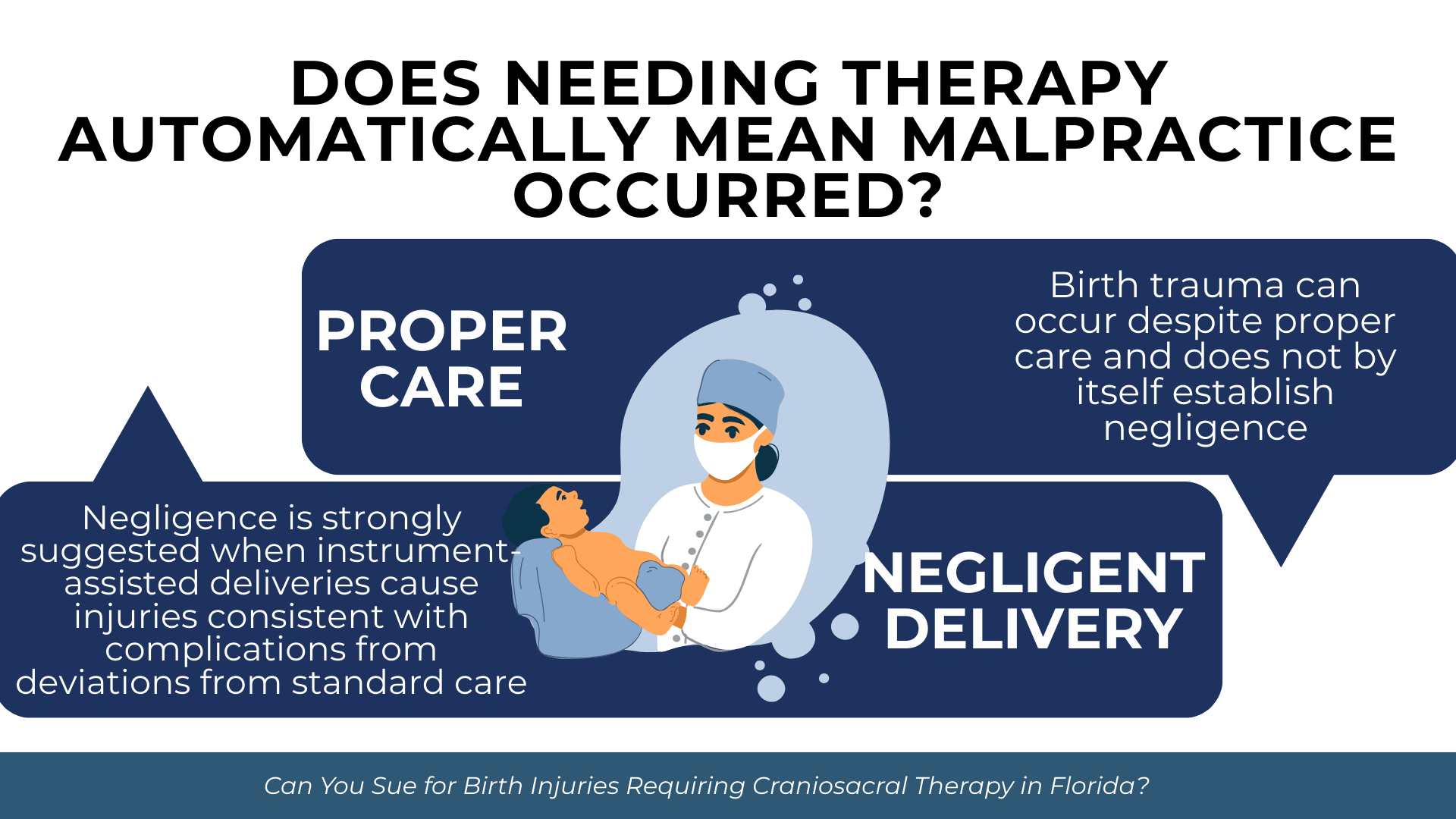
Does Needing Therapy Automatically Mean Malpractice Occurred?
Birth Injuries That Occur Despite Proper Care
Needing craniosacral therapy does not by itself prove that malpractice caused your baby’s condition. Some birth trauma occurs even when medical providers follow all appropriate protocols. According to a BMJ Open population-based study (2018), birth trauma affects nearly 5 per 1,000 newborns even under normal delivery circumstances.
Certain factors increase birth trauma risk regardless of provider conduct, including large fetal size, abnormal presentation, and prolonged labor. The existence of injury alone does not create an inference of negligence under Fla. Stat. § 766.102(3)(b).
When Treatment Needs Suggest Negligent Delivery
However, some circumstances strongly suggest that negligence contributed to birth trauma. Instrument-assisted deliveries carry significantly elevated risk. The same BMJ Open study (2018) found that forceps delivery resulted in birth trauma at a rate of 25.48 per 1,000 births compared to just 4.74 per 1,000 for spontaneous vaginal delivery—more than five times the baseline rate.
When your baby’s injuries correspond to the type of delivery complications that occurred, and when those complications resulted from decisions that deviated from standard practice, the connection between negligence and injury becomes clearer.
The Role of Expert Medical Testimony
Florida requires expert testimony in virtually all birth injury malpractice cases. Under Fla. Stat. § 766.102(5), your expert must specialize in the same specialty as the defendant and must have devoted professional time during the three years preceding the incident to active clinical practice, instruction, or research in that specialty.
The expert must establish that the provider breached the standard of care and that this breach caused your baby’s injuries at greater than fifty percent probability. Without qualified expert testimony connecting the delivery team’s actions to your baby’s need for therapy, a claim cannot proceed.
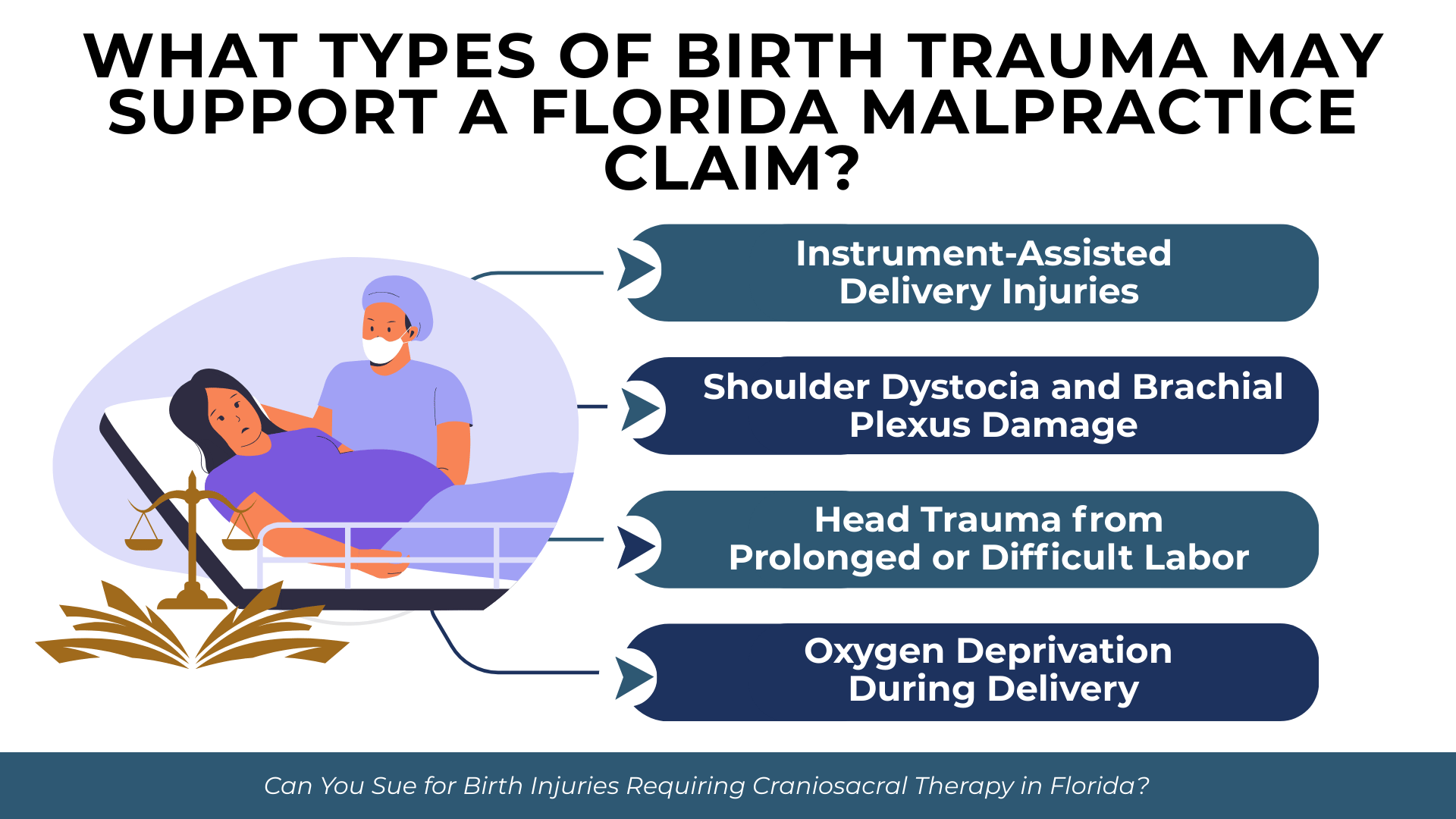
What Types of Birth Trauma May Support a Florida Malpractice Claim?
Instrument-Assisted Delivery Injuries
Forceps and vacuum extractors can cause significant trauma when used improperly or when vaginal delivery should have been abandoned in favor of cesarean section. According to BMJ Open research (2018), vacuum-assisted delivery results in birth trauma at 14.22 per 1,000 births—three times the spontaneous delivery rate.
Injuries from instrument-assisted delivery that may require therapeutic intervention include scalp lacerations and bruising, cephalohematoma, facial nerve damage, and skull fractures. When providers persist with instrumental delivery despite warning signs or apply excessive force, their conduct may fall below the standard of care.
Shoulder Dystocia and Brachial Plexus Damage
Shoulder dystocia occurs when the baby’s shoulder becomes lodged behind the mother’s pubic bone during delivery. According to American Academy of Family Physicians guidelines (2004), shoulder dystocia occurs in 0.6 to 1.4 percent of births with normal birth weight but rises to 5-9 percent among larger fetuses weighing 4,000-4,500 grams.
Brachial plexus injuries—damage to the nerves controlling the arm and hand—occur in 4-15 percent of shoulder dystocia cases. According to the Journal of Pediatric Orthopaedics (2024), brachial plexus birth injuries occur at a rate of 0.9 to 1.1 per 1,000 live births nationally.
These injuries often require extensive therapy. Research published in Paediatrics & Child Health (2021) indicates that 20-30 percent of infants with neonatal brachial plexus palsy do not recover fully. Malpractice claims may arise when providers fail to recognize risk factors for shoulder dystocia or use improper maneuvers to resolve it.
Head Trauma from Prolonged or Difficult Labor
Prolonged labor places sustained pressure on the baby’s skull and can cause molding, cephalohematoma, or caput succedaneum—conditions that craniosacral therapy frequently addresses. When providers fail to recognize that labor is not progressing safely or delay intervention despite signs of fetal distress, the resulting head trauma may support a malpractice claim.
Florida’s cesarean section rate of 36.2 percent, according to the Florida Department of Health (2023), reflects the frequency with which surgical delivery becomes necessary. The question in many birth injury cases is whether that decision was made in time to prevent harm.
Oxygen Deprivation During Delivery
While craniosacral therapy primarily addresses musculoskeletal and nervous system issues from physical trauma, some infants receiving CST experienced oxygen deprivation during delivery that affected neurological development. Hypoxic-ischemic encephalopathy—brain injury from oxygen deprivation—occurs in approximately 1-3 per 1,000 live births according to Medscape clinical references (2023-2024).
Failure to recognize and respond to fetal distress signals on monitoring equipment represents one of the most common allegations in birth injury cases involving oxygen deprivation.
How Long Do You Have to File a Birth Injury Claim in Florida?
Get started with your complimentary case evaluation today;
call us at (305) 694-2676 or reach us online using our
secure contact form.
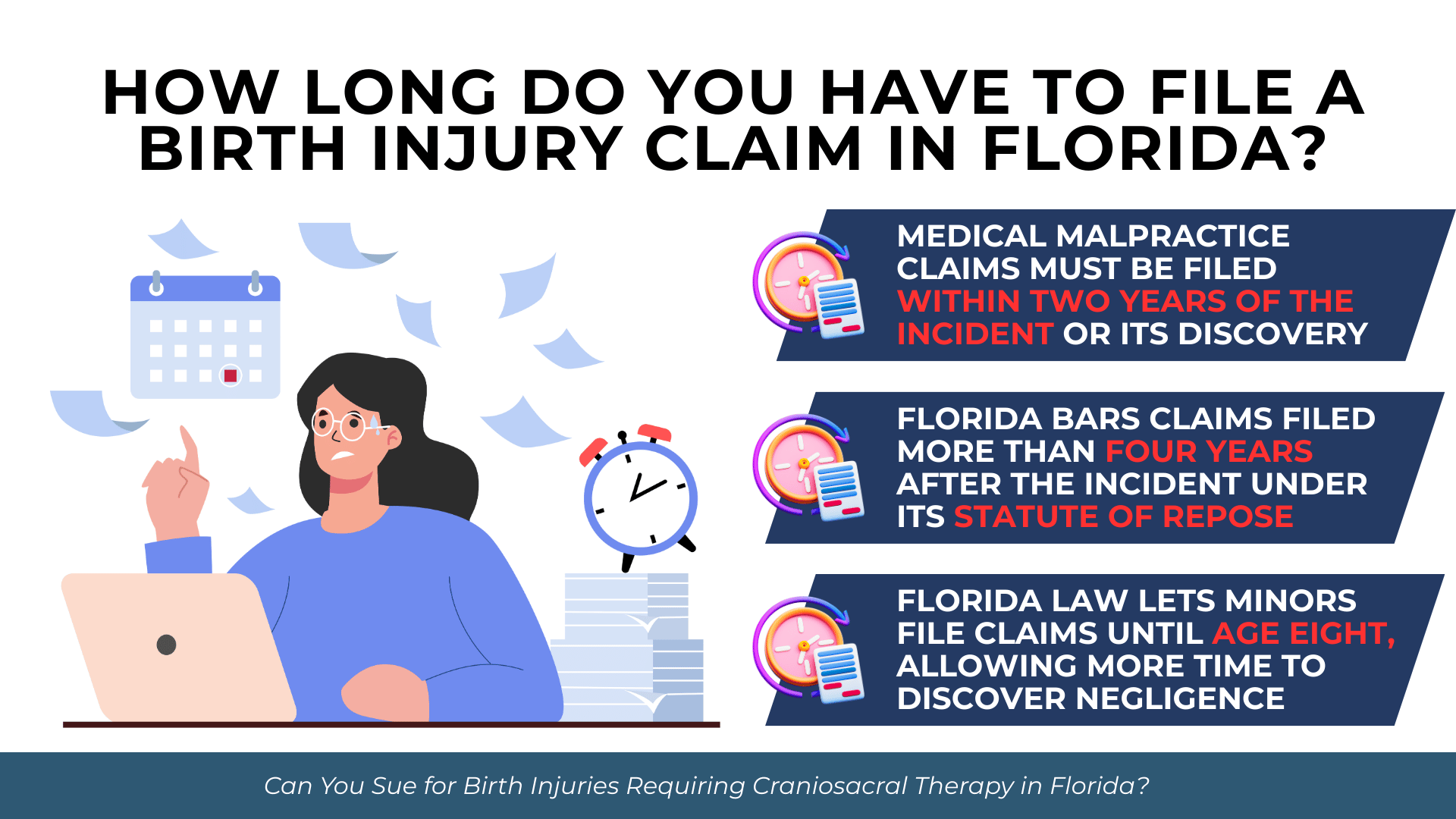
The Two-Year Statute of Limitations
Under Fla. Stat. § 95.11(5)(c), medical malpractice actions must be commenced within two years from the time the incident occurred or within two years from the time the incident is discovered or should have been discovered with due diligence. The Florida Supreme Court clarified in Tanner v. Hartog, 618 So. 2d 177 (Fla. 1993), that discovery requires knowledge of the injury and a “reasonable possibility that the injury was caused by medical malpractice.”
The Four-Year Statute of Repose
Regardless of when you discover the injury, Florida imposes a four-year statute of repose that bars claims filed more than four years after the date of the incident. This absolute deadline applies even if the injury was impossible to discover earlier.
Special Rules for Minor Children
Florida law provides an important exception for children. The four-year statute of repose does not bar an action on behalf of a minor filed on or before the child’s eighth birthday. This gives families additional time to investigate whether birth trauma resulted from negligence, as the full extent of some injuries may not become apparent until the child grows older.
What Damages Can Florida Families Recover?
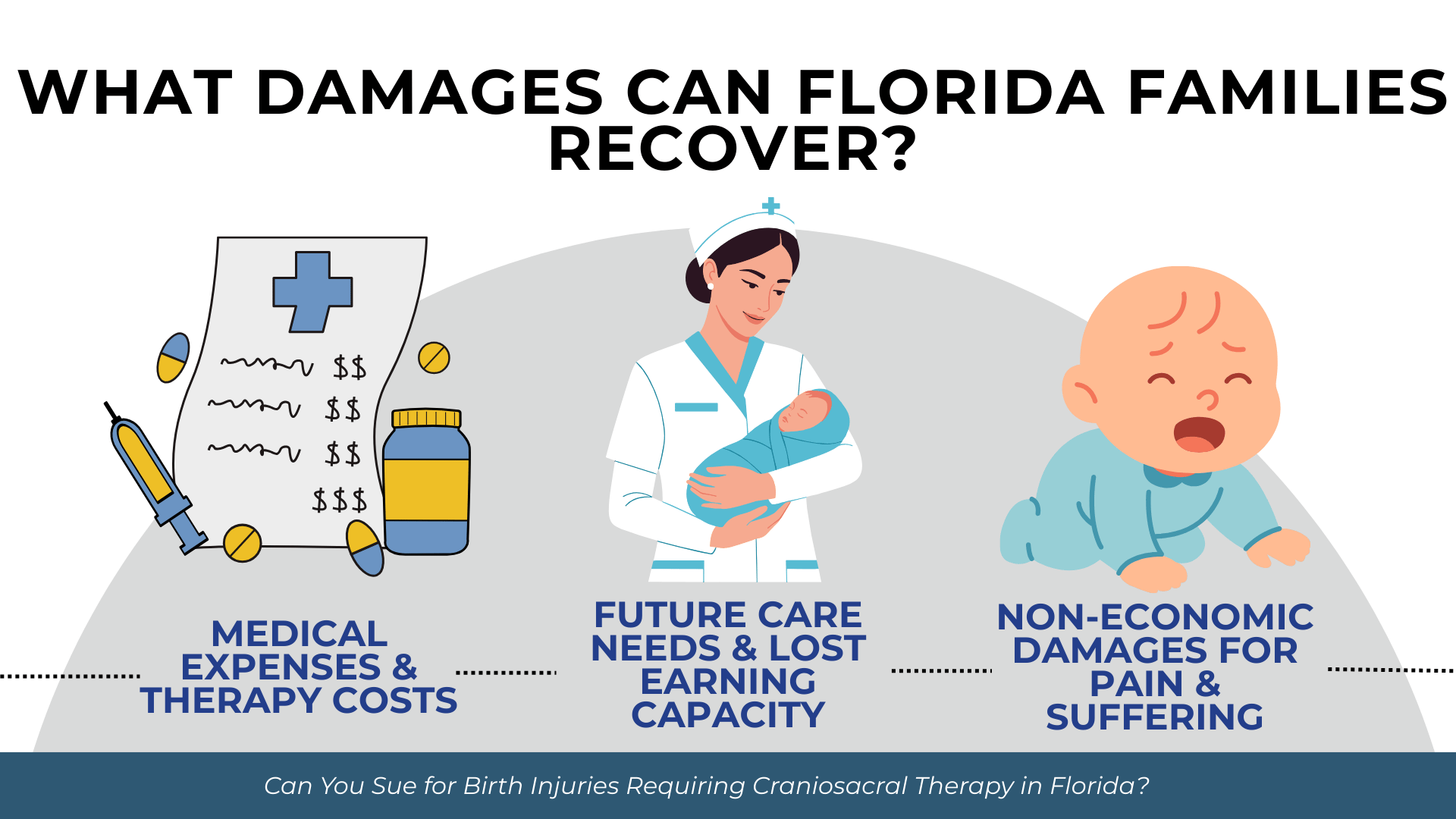
Medical Expenses and Therapy Costs
Economic damages include all medical costs associated with your baby’s birth injury. These encompass:
- Hospital bills from the delivery and any subsequent admissions
- Craniosacral therapy sessions and other rehabilitative treatments
- Physical therapy, occupational therapy, and speech therapy
- Medications and medical equipment
- Transportation costs for medical appointments
- Home modifications if the child develops lasting disabilities
Future Care Needs and Lost Earning Capacity
For children with permanent injuries, damages may include the projected lifetime cost of ongoing therapy, medical care, and assistance. If the injury affects your child’s future ability to work, lost earning capacity becomes a significant damage category. Economic experts and life care planners often testify about these long-term costs.
Non-Economic Damages for Pain and Suffering
Following North Broward Hospital District v. Kalitan, 219 So. 3d 49 (Fla. 2017), Florida has no enforceable caps on non-economic damages in medical malpractice cases. Families may recover for their child’s physical pain and suffering, mental anguish, and loss of enjoyment of life. Parents may also recover for their own mental pain and suffering and loss of their child’s companionship.
Frequently Asked Questions
Is craniosacral therapy considered evidence that malpractice occurred?
The need for CST suggests your baby experienced birth trauma, but it does not by itself prove negligence. Many birth injuries occur despite proper medical care. A qualified medical expert must review your delivery records to determine whether the treatment team’s actions fell below the standard of care and caused your baby’s condition.
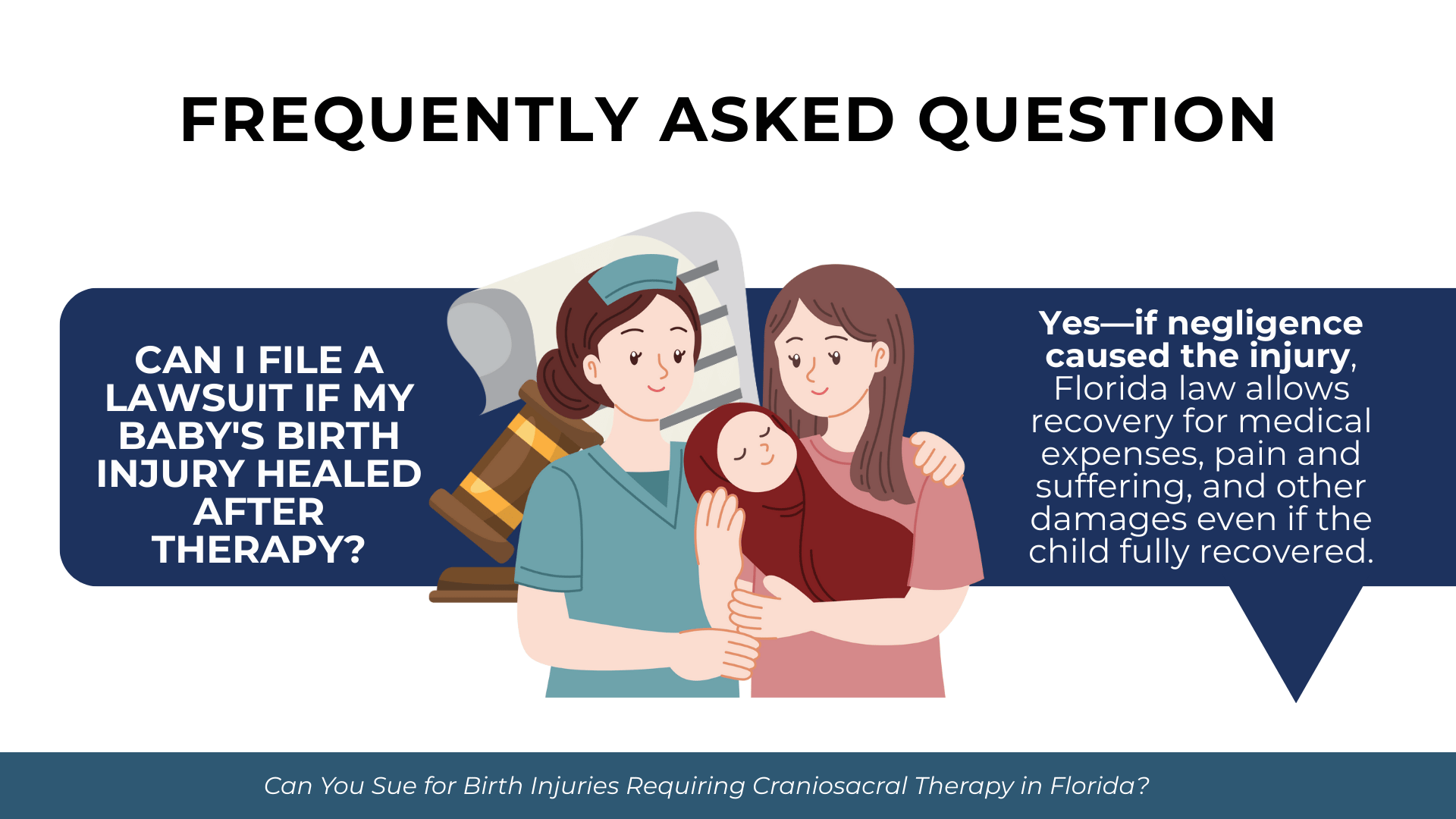
Can I file a lawsuit if my baby’s birth injury healed after therapy?
Yes, if negligence caused the injury. Florida allows recovery for past medical expenses, pain and suffering, and other damages even when the child has recovered. The fact that treatment was successful does not eliminate the harm your family experienced or the costs you incurred.
What if the hospital says my baby’s condition was unavoidable?
Hospitals and their insurers frequently assert that birth injuries were unforeseeable complications rather than the result of negligence. This is precisely why expert medical testimony is essential. An independent expert can review the records and provide an opinion on whether the standard of care was met.
Do I need a medical expert to file a birth injury claim in Florida?
Yes. Florida’s pre-suit requirements under Fla. Stat. § 766.203 mandate that you obtain a verified written medical expert opinion corroborating reasonable grounds to support your claim before you can even send the required notice of intent to sue. The expert must meet specific qualification requirements under Fla. Stat. § 766.102(5).
How much does it cost to pursue a birth injury lawsuit?
Most birth injury attorneys work on a contingency fee basis, meaning they receive a percentage of any recovery rather than charging upfront fees. However, these cases require substantial investment in expert witnesses, medical record analysis, and litigation costs. Discuss fee arrangements and case expenses during any initial consultation.
Taking Action After a Birth Injury in Florida
When your baby requires craniosacral therapy or other treatment for birth trauma, the underlying question is whether that trauma resulted from negligent medical care. Florida law provides a pathway for families to seek compensation when healthcare providers fail to meet the standard of care during delivery, but these claims require meeting specific legal elements and procedural requirements.
The two-year statute of limitations makes timely action important, though the extended deadline for minor children provides additional protection. Because Florida requires expert medical opinions before filing suit, families benefit from consulting with an attorney who can coordinate the medical record review and expert analysis needed to evaluate whether a claim exists.
If you have questions about a potential birth injury claim involving your child, contact Prosper Injury Attorneys to discuss your situation.